Tag: Business Processes

  • The Untapped Potential of API Integration in Workflow Automations

    The Untapped Potential of API Integration in Workflow Automations

    For companies to grow successfully, they must also grow sustainably. Scaling operations, expanding your workforce, and exploring new markets will simultaneously increase the number of challenges your company has to address.  

    Two key challenges sit at the heart of these obstacles. First, your company must meet rising demand — consumer demand and the organization’s need for additional resources. Second, your company cannot grow so fast or so wide that the added costs outweigh the new profit margins. Each business employs its own mix of solutions to ease these growing pains, but one of the most versatile is API integration in workflow automations. 

    The Role of API Integration in Workflow Automations

    An API, or an application programming interface, can be understood as a set of instructions. It allows software to understand and interpret information produced by other programs. In turn, API integration is the process of allowing software to use APIs independently, allowing them to communicate with each other.  

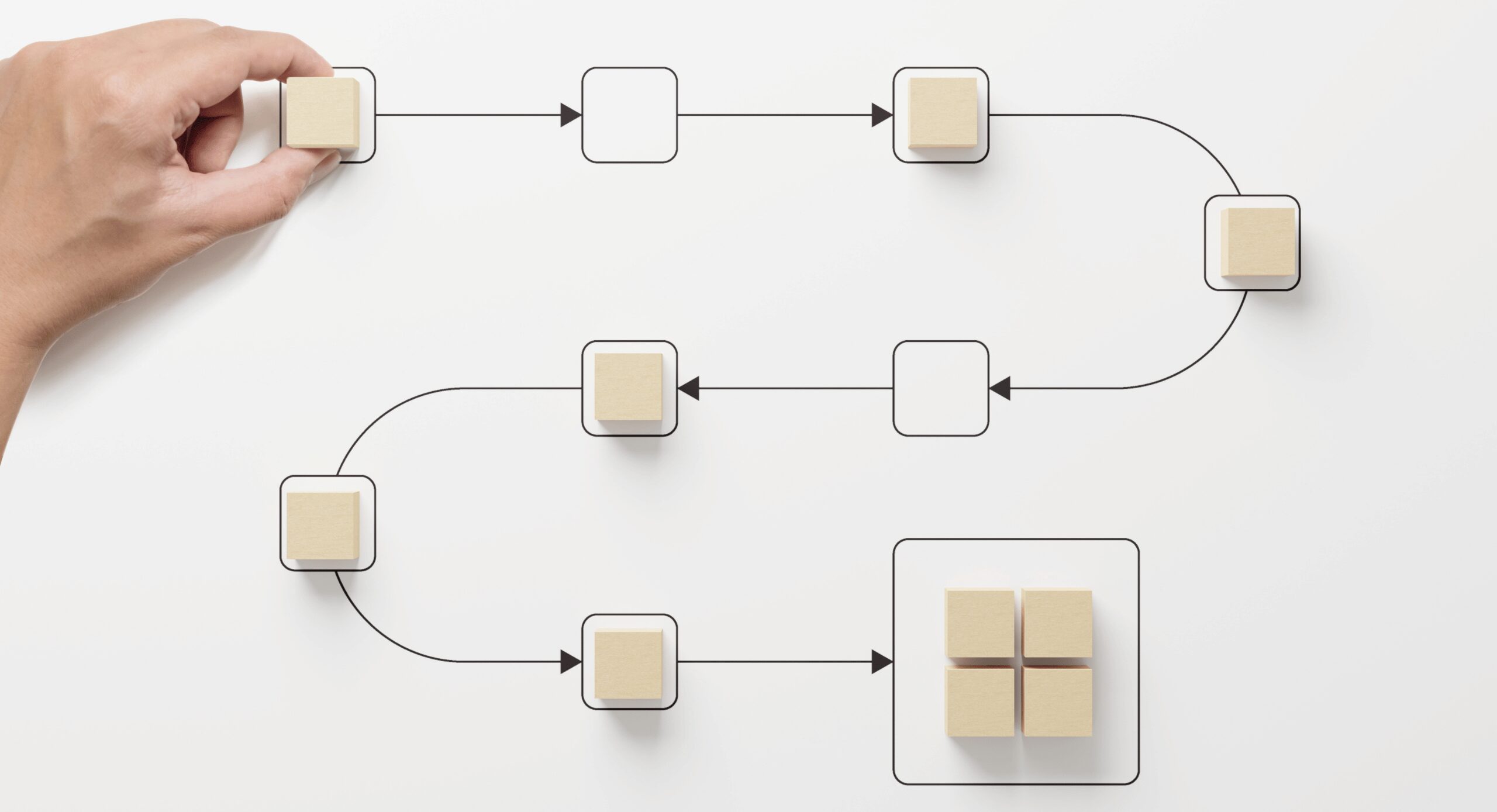
    Workflows operate similarly, offering a guideline for applications to use. However, workflows provide a comprehensive form of automation by enabling the quick, consistent, and reliable completion of repetitive tasks with minimal human oversight. 

    When API integration is used in conjunction with workflow automation, your company can bridge together dozens of automated processes across different applications. We provided such support for one of our pharmaceutical clients to transform their credit and collection process

    As another example, e-commerce websites use APIs for purchases. Upon check-out, the website communicates with a payment gateway (such as PESONet and InstaPay) to prompt the user to provide their bank information. Following successful card input and verification, the gateway communicates with a bank’s system to process the payment. Meanwhile, a workflow can take care of emailing the customer about their transaction while also updating the website’s listed inventory. 

    Types of Integrations

    These interactions cover a broad range of functions that can tackle repetitive, time-consuming processes to boost productivity: 

    • Automations designed for synchronization allow information to be consistent across software and devices so that people are constantly aligned and data silos are eliminated. Scheduling apps like Google Calendar, as well as conference tools like Zoom and MS Teams, reflect itinerary changes and notify event participants instantaneously. These apps can even work with task managers such as Notion and Monday.com to publish task deadlines to the calendar. 
    • To develop their online presence, many brands have looked to automation for social media. Management platforms such as Hootsuite and Later consolidate the back-end maintenance of multiple social media accounts, allowing for bulk content uploads. These platforms include additional quality-of-life auto-scheduling features, such as posting at optimal times, tracking keyword and engagement performance, etc. For content like videos and blogs, which are hosted on other websites, workflows can be set to synchronize updates across every account. 
    • For B2B integration, companies develop automations so that their in-house software can communicate with the systems of their business partners, namely, suppliers and clients.  Logistics platforms like the Digital Hub can automatically canvas shipping costs across couriers, according to the user’s preferences and the package’s specifications. 

    Developing Your APIs

    API integration in workflow automations can either be processed in-house or developed by a third party.  

    In-house or custom integration has the advantage of granting your company precise control over functionality, but these integrations may be error-prone and require a great investment of time, money, and resources to get right. Third-party solutions allow companies to use experts without the added costs of permanent hiring. While both options are viable, the ideal option depends on your company’s existing resources and capabilities. 

    Regardless of your chosen approach, your integration solutions should be modular to accommodate more traffic, new features, and emerging processes without requiring a drastic number of resources to upgrade. Our mission is to support you on this journey by augmenting your logistics and operations with tailor-made technological and human solutions. Once integration and automation are successfully brought together, the possibilities are endless for a company’s growth.  

    Your workflow processes are best utilized when supporting a reliable workforce. Get in touch with us for a free consultation, so that we can explore how your logistics can be transformed. 

  • How Efficient Business Operations Lead to a High Level of Customer Satisfaction

    How Efficient Business Operations Lead to a High Level of Customer Satisfaction

    The age of instant gratification has presented businesses with mounting pressure to deliver top quality goods and services to meet the ever-changing demands of customers. Businesses only have a few opportunities to meet customer expectations, or surpass them, to win a chance for continued business.  

    This challenge starts with operations, and it culminates in customer satisfaction. 

    Defining Satisfaction 

    Customer satisfaction is an important measure of company success, understood as the sum of customer sentiment towards the brand. This measure identifies whether the company’s products, services, and overall capabilities have met their expectations.  

    This aspect of the customer experience is quite nuanced, representing thousands of opinions. So, companies determine their customer satisfaction levels through a mix of both qualitative and quantitative data. Since this metric is usually understood as a Key Performance Indicator (KPI), it draws on ratings and scales like the Customer Satisfaction Score (CSAT) and the Net Promoter Score (NPS) which can be easily conducted on a large scale and analyzed. Third parties also conduct these analyses for different brands, such as the American Customer Satisfaction Index (ASCI). The emerging patterns are then supplemented with qualitative context from the anecdotes and feedback provided by surveys. There also exists a range of frameworks that help companies determine how various aspects of expectations and brand imagery influence one another to form satisfaction, such as the Taiwan Customer Satisfaction Index (TSCI) model. 

    From this comprehensive network of data points and references, companies can better understand their customers and develop new action plans to continue meeting expectations. 

    Attaining a high level of customer satisfaction delivers a host of benefits for companies that are able to achieve it. The more satisfied the customers are, the more likely they are to continue engaging with your business, which provides more opportunities for the company to build brand trust and loyalty. In turn, the company’s reputation and appeal can improve, garnering more attention. The consumers themselves effectively become brand ambassadors through word-of-mouth. With more attention and more customers, the company’s financial performance, growth, and development are elevated. 

    However, low customer satisfaction can adversely harm your company’s reputation. Negative experiences diminish brand loyalty and customer retention. Unfortunately, such negative experiences occur due to companies diverting focus from quality in favor of quantity. As they hop on the latest trends by offering rushed products and services, they often put quality assurance and customer service on the wayside. 

    To be proactive in emphasizing customer satisfaction, companies should look at how their operations affect product and service quality, thus the customer experience. 

    The Role of Operations 

    Business operations refer to the day-to-day processes and activities necessary in increasing the company’s value and income.  

    The specific arrangement of operational divisions can differ between industries and even companies, but the Corporate Finance Institute (CFI) lists a few examples that can be used as reference. For industries with physical products, like retail, their operations usually involve materials acquisition, research and development, manufacturing, sales and marketing, and customer service. For the service industries, there are two main operational divisions: the front end, which consists of the workforce, their service delivery, and customer relations; and the back end, inclusive of mailroom, recruitment and human resources. 

    The relationship between operations and customer satisfaction is straightforward. When businesses focus on efficient and excellent operations, they can accurately respond to the shifting needs of their consumers, thereby emphasizing their quality of work and elevating customer satisfaction. 

    This is the objective of operations management, or the discipline concerned with operational optimization, efficiency, and excellence. While it manifests in distinct types, such as supply chain management and inventory management, operations management involves the effective use of resources, at minimal cost and risk. As companies grow and scale up, so will the importance of this discipline. 

    Different Operational Approaches 

    There are a range of techniques and tools that can be employed to tackle individual operational concerns like CRM protocols or supply chain blocks, but departmental or organization-wide approaches are better recommended. These concerns do not exist in a vacuum, as they affect and are affected by the systems that surround them. Individual actions should be implemented in the service of overall improvement and go beyond minor, isolated changes. In fact, fostering reliable and dependable operations supports not just satisfaction but long-term customer loyalty

    In this case study, an agritech (agricultural technology) firm saw declining customer satisfaction and increasing service issues as it scaled operations. While a shift in technology use or workflow changes may have met some of the emerging gaps, these measures would have had a limited effect. The company enacted a five-phase plan based on the Customer Service Excellence methodology which carefully examined current service operations, analyzed the customers’ experiences, and allowed for the development of appropriate training and integration measures, as well as a plan for continuous improvement. In the end, this firm saw its CSAT increase by 15% in the first year after implementation, a 5% increase in customer retention, and a 10 to 15% increase in revenue. 

    A telecommunications provider saw similar success after it implemented the Strategic Analysis and Execution Methodology, which approached process optimization with the lens of diagnostics and performance management. In the end, the company was able to reduce its average handling time by 20% and increased the first-call resolution rate by 15%, leading to a 10% increase in customer satisfaction scores. 

    The Shingo Institute of Utah State University suggests shaping business operations around a sustainable culture of organization excellence, or the approach that highlights continuous improvement of the entire enterprise through empowerment. Ten qualities are highlighted in the Shingo Guiding Principles. Altogether, the principles encourage managers and employees to approach operations with dignity, critical thinking, and active participation to create a workflow that is human-centric, efficient, and valued. By these standards, dozens of companies have transformed their operations across the world. They are recognized through the Shingo Prize, Silver and Bronze Medallions—respectively highlighting successful transformative journeys, companies in the middle of the process, and those in the initial stages. 

    Reaching a High Level of Customer Satisfaction 

    Elevating customer satisfaction through operations is a lengthy and challenging process since it requires an analysis of how the organization’s components affect each other in attempting to meet customer expectations. The plan of action may not necessarily have to involve the entire organization, it can be as small as a change in protocol, the integration of modern technology, or outsourcing non-core functions. But, the company must look out for how these changes affect the company, product and service quality, and the customers. 

    Those who understand their customers’ expectations and respond accordingly are set up to thrive. For more information on how DBSA employs outsourcing and technology to enhance your business operations, visit our website today.