
Tag: Automation

  • How Drake Business Services Asia is Driving Innovation in Asia Pacific Region

    How Drake Business Services Asia is Driving Innovation in Asia Pacific Region

    In today’s fast-paced business world, companies in the Asia-Pacific (APAC) region must streamline operations, cut costs, and adopt new technologies to remain competitive and resilient. Drake Business Services Asia (DBSA), established in 2013 and supported by Drake International, is taking part in this change. Operating in seven APAC countries, including AustraliaJapanKorea, the PhilippinesSingapore, and Taiwan, DBSA offers customized automation and outsourcing solutions, allowing clients to focus on core activities. 

    DBSA’s mission is to enhance efficiency and help clients stay competitive. By combining people, technology, and re-engineered processes, DBSA has delivered significant results across a wide range of industries, including financial services and technology. DBSA recently partnered with a global bank, reducing their messenger workforce costs by 37% while improving service metrics. Likewise, in partnering with a financial institution, DBSA, through their proprietary technology Digital Hub digitized over 26,000 boxes of customer records ahead of schedule. 

    At the core of DBSA’s innovation is Digital Hub, a logistics-focused platform developed to simplify and optimize courier and mailroom operations across the APAC region. The platform integrates courier management, dispatch tracking, and cost optimization into a single, intelligent solution. It identifies the most efficient and cost-effective courier options, automates booking processes, and provides real-time visibility across the delivery network. By leveraging automation and analytics, DBSA enables clients to achieve faster turnaround times, lower logistics costs, and improved transparency in every delivery cycle. 

    DBSA’s approach focuses on technology and measurable results, offering cost savings and operational excellence. Whether digitizing mailrooms or enhancing asset management, DBSA turns support functions into value-adding hubs. 

    Success stories include transforming a software provider’s visitor experience and managing a social media platform’s secure mailroom operation, showcasing DBSA’s ability to meet APAC’s demanding business needs. 

    As APAC businesses adopt hybrid models and face increased compliance and competition, DBSA expands its service offerings and geographic reach. With ongoing investment in technology and local expertise, DBSA leads in reimagining non-core process management. 

    By transforming back-office functions into agile, tech-enabled services, Drake Business Services Asia not only adapts to change but drives it, setting new standards for innovation and efficiency in the APAC region. 

    Ready to transform your operations and unlock new efficiencies? Contact us to explore how we can support your growth across APAC. 
  • The Untapped Potential of API Integration in Workflow Automations

    The Untapped Potential of API Integration in Workflow Automations

    For companies to grow successfully, they must also grow sustainably. Scaling operations, expanding your workforce, and exploring new markets will simultaneously increase the number of challenges your company has to address.  

    Two key challenges sit at the heart of these obstacles. First, your company must meet rising demand — consumer demand and the organization’s need for additional resources. Second, your company cannot grow so fast or so wide that the added costs outweigh the new profit margins. Each business employs its own mix of solutions to ease these growing pains, but one of the most versatile is API integration in workflow automations. 

    The Role of API Integration in Workflow Automations

    An API, or an application programming interface, can be understood as a set of instructions. It allows software to understand and interpret information produced by other programs. In turn, API integration is the process of allowing software to use APIs independently, allowing them to communicate with each other.  

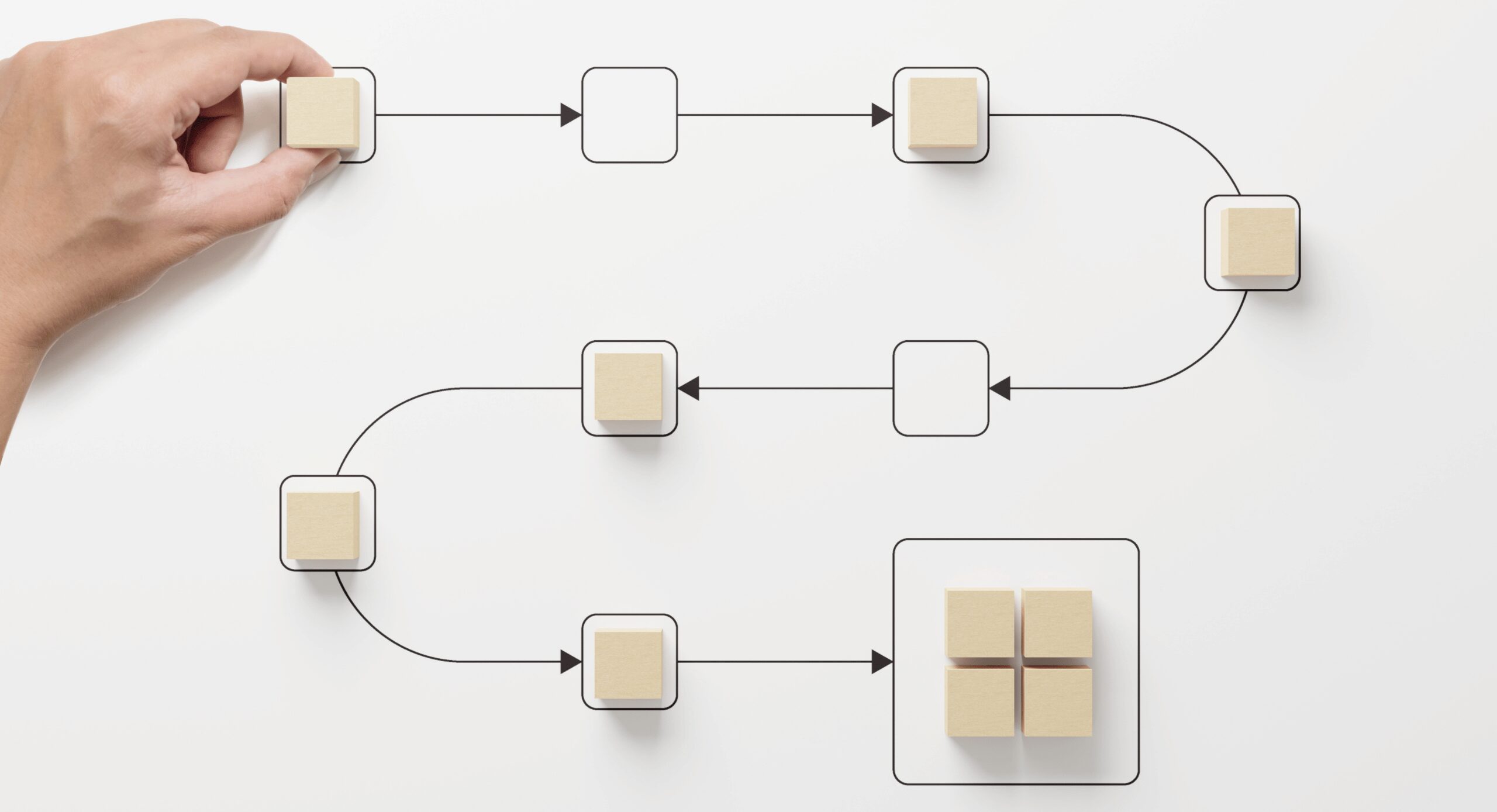
    Workflows operate similarly, offering a guideline for applications to use. However, workflows provide a comprehensive form of automation by enabling the quick, consistent, and reliable completion of repetitive tasks with minimal human oversight. 

    When API integration is used in conjunction with workflow automation, your company can bridge together dozens of automated processes across different applications. We provided such support for one of our pharmaceutical clients to transform their credit and collection process

    As another example, e-commerce websites use APIs for purchases. Upon check-out, the website communicates with a payment gateway (such as PESONet and InstaPay) to prompt the user to provide their bank information. Following successful card input and verification, the gateway communicates with a bank’s system to process the payment. Meanwhile, a workflow can take care of emailing the customer about their transaction while also updating the website’s listed inventory. 

    Types of Integrations

    These interactions cover a broad range of functions that can tackle repetitive, time-consuming processes to boost productivity: 

    • Automations designed for synchronization allow information to be consistent across software and devices so that people are constantly aligned and data silos are eliminated. Scheduling apps like Google Calendar, as well as conference tools like Zoom and MS Teams, reflect itinerary changes and notify event participants instantaneously. These apps can even work with task managers such as Notion and Monday.com to publish task deadlines to the calendar. 
    • To develop their online presence, many brands have looked to automation for social media. Management platforms such as Hootsuite and Later consolidate the back-end maintenance of multiple social media accounts, allowing for bulk content uploads. These platforms include additional quality-of-life auto-scheduling features, such as posting at optimal times, tracking keyword and engagement performance, etc. For content like videos and blogs, which are hosted on other websites, workflows can be set to synchronize updates across every account. 
    • For B2B integration, companies develop automations so that their in-house software can communicate with the systems of their business partners, namely, suppliers and clients.  Logistics platforms like the Digital Hub can automatically canvas shipping costs across couriers, according to the user’s preferences and the package’s specifications. 

    Developing Your APIs

    API integration in workflow automations can either be processed in-house or developed by a third party.  

    In-house or custom integration has the advantage of granting your company precise control over functionality, but these integrations may be error-prone and require a great investment of time, money, and resources to get right. Third-party solutions allow companies to use experts without the added costs of permanent hiring. While both options are viable, the ideal option depends on your company’s existing resources and capabilities. 

    Regardless of your chosen approach, your integration solutions should be modular to accommodate more traffic, new features, and emerging processes without requiring a drastic number of resources to upgrade. Our mission is to support you on this journey by augmenting your logistics and operations with tailor-made technological and human solutions. Once integration and automation are successfully brought together, the possibilities are endless for a company’s growth.  

    Your workflow processes are best utilized when supporting a reliable workforce. Get in touch with us for a free consultation, so that we can explore how your logistics can be transformed. 

  • Top 5 Benefits of Implementing Workflow Automation 

    Top 5 Benefits of Implementing Workflow Automation 

    In today’s fast-paced business environment, efficiency, cost reduction, and performance enhancement are high priorities. Workflow automation is a powerful strategy to achieve these objectives, transforming routine tasks into automated processes, streamlining operations, increasing accuracy, and boosting employee morale. Here’s a closer look at the top five advantages of workflow automation.

    Improved Efficiency

    Manual processes can be time-consuming and prone to delays, especially when multiple departments are involved. Workflow automation simplifies this by automating tasks to ensure a smooth flow without bottlenecks.  It minimises downtime and human error, freeing up employees to focus on more business-critical tasks.

    Workflow automation can save valuable time in areas such as document processing or approvals, while also prioritising and assigning tasks for effective workload management. Ultimately, this leads to quicker turnaround times and more efficient business processes.

    Cost Reduction

    One of the primary drivers for adopting workflow automation is the reduction of operational costs. Automating repetitive tasks lowers labour costs, eliminates the need for extra resources, and minimizses costly errors and rework.

    In addition to cutting labour costs, workflow automation reduces the reliance on paper-based tasks, lowering overhead from manual processes and allowing for optimised resource allocation. Businesses that invest in automation often experience a strong return on investment (ROI), driven by substantial long-term savings and operational efficiencies.

    Enhanced Accuracy

    Human error is an inevitable aspect of manual workflows, of which risks can be substantially reduced through automation. Automated systems follow set rules and procedures, ensuring tasks are completed with optimal accuracy and consistency. This is especially crucial for industries that rely heavily on data accuracy, such as finance, healthcare, and legal services.

    For example, automating invoice processing can drastically reduce the likelihood of input errors, ensuring that data is accurate and up to date. This level of accuracy not only improves compliance but also boosts trust and credibility with customers and stakeholders.

    Increased Employee Satisfaction

    Repetitive tasks can lead to frustration and decreased job satisfaction. Workflow automation helps alleviate this by taking over routine processes, allowing employees to focus on more strategic work. This not only makes employees feel more valued and empowered, but also reduces administrative work, freeing up time for professional development and innovation. Happier employees are often more productive, contributing to a healthier and more positive workplace culture.

    Scalability and Flexibility

    As businesses grow, manual processes can become a hindrance, limiting the company’s ability to scale effectively. Workflow automation allows for scalability by enabling companies to handle larger workloads without a proportional increase in resources. Automated systems can easily be adjusted to accommodate changes in business needs, whether that’s processing more transactions, handling additional customers, or managing higher volumes of data.

    Moreover, workflow automation provides businesses with the flexibility to adapt to market changes and customer demands quickly. By automating key processes, companies can respond to shifts in the business landscape with greater agility, ensuring they remain competitive.

    The implementation of workflow automation, powered by our Digital Hub, offers a range of benefits, from improving operational efficiency and reducing costs to enhancing accuracy and boosting employee satisfaction. As businesses continue to evolve, automation will play a crucial role in ensuring they remain agile, competitive, and able to meet the growing demands of the modern workplace. By leveraging automation technology, companies can position themselves for long-term and sustainable success, while fostering a more productive and satisfied workforce.

    For more insights into how workflow automation can benefit your business, visit DBLA or get in touch with a member of our team today.